Proposed Redesign for Reagan National Airport
A Stately Vision for Travel in America
Spring 2026

The intent of this project is to reimagine the main terminal building of the Ronald Reagan National Airport in Washington, D.C., as part of the Department of Transportation's Beautifying Transportation Infrastructure Challenge. The new design restyles the terminal in a visual language that draws on existing architecture in Washington, D.C., especially buildings in the Federal Triangle, federal office buildings from the first half of the 20th century, and the architecture of John Russell Pope. The new building also looks back to American airport terminals of the early 20th century, primarily the existing historic terminal at Reagan National Airport. Overall, this new terminal is meant to be an architectural expression both of the character of Washington, D.C. and in honor of the beginnings of flight in America: elegant, refined, yet also celebratory. The overall site has been left largely as it currently exists: arrival and departure traffic looping around parking garages and meeting the main terminal building at two different levels. At the lowest level of the terminal, Level 1, is the arrivals concourse and baggage claims. On Level 2, there are two main zones running the length of the building, split according to whether the functions of a particular space are pre- or post-security. Baggage processing and check-in for departures are kept before security at the front of the terminal, ensuring quick access after drop-off from the parking and taxi bays along the front of the terminal. Visitors to the terminal then proceed up to Level 3 to pass security screening, after which they descend back to Level 2 and are guided to their gate along the soaring main concourse running along the rear of the terminal. The building’s structure of repeating bays between columns allows for modularity and flexibility of space, and nods to the existing terminal’s appearance. Traffic flows can be easily reconfigured to accommodate large volumes of passengers; and lounges, restaurants, and other amenities can be simply integrated into these modular spaces.

Main Elevation
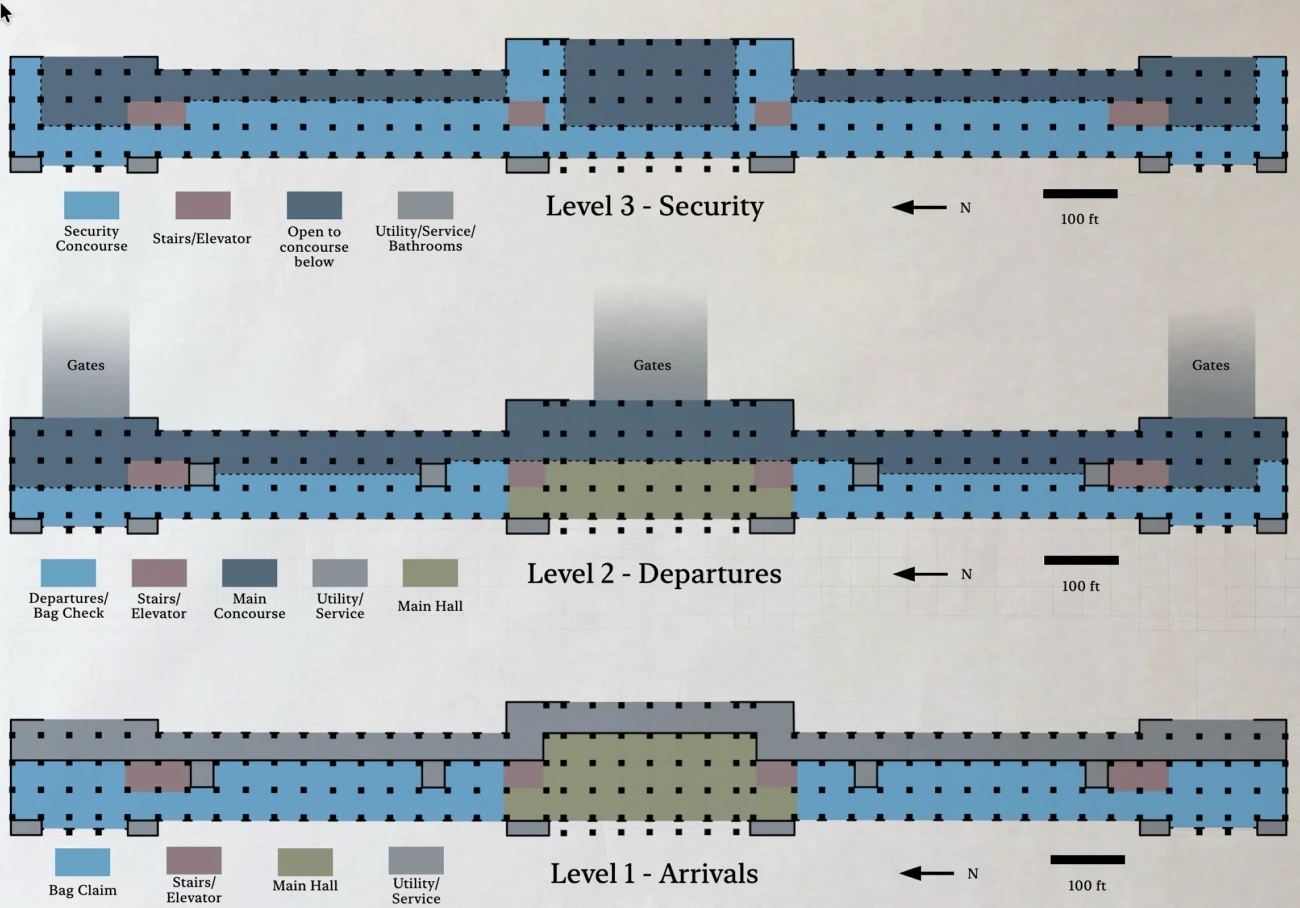
Floor Plans
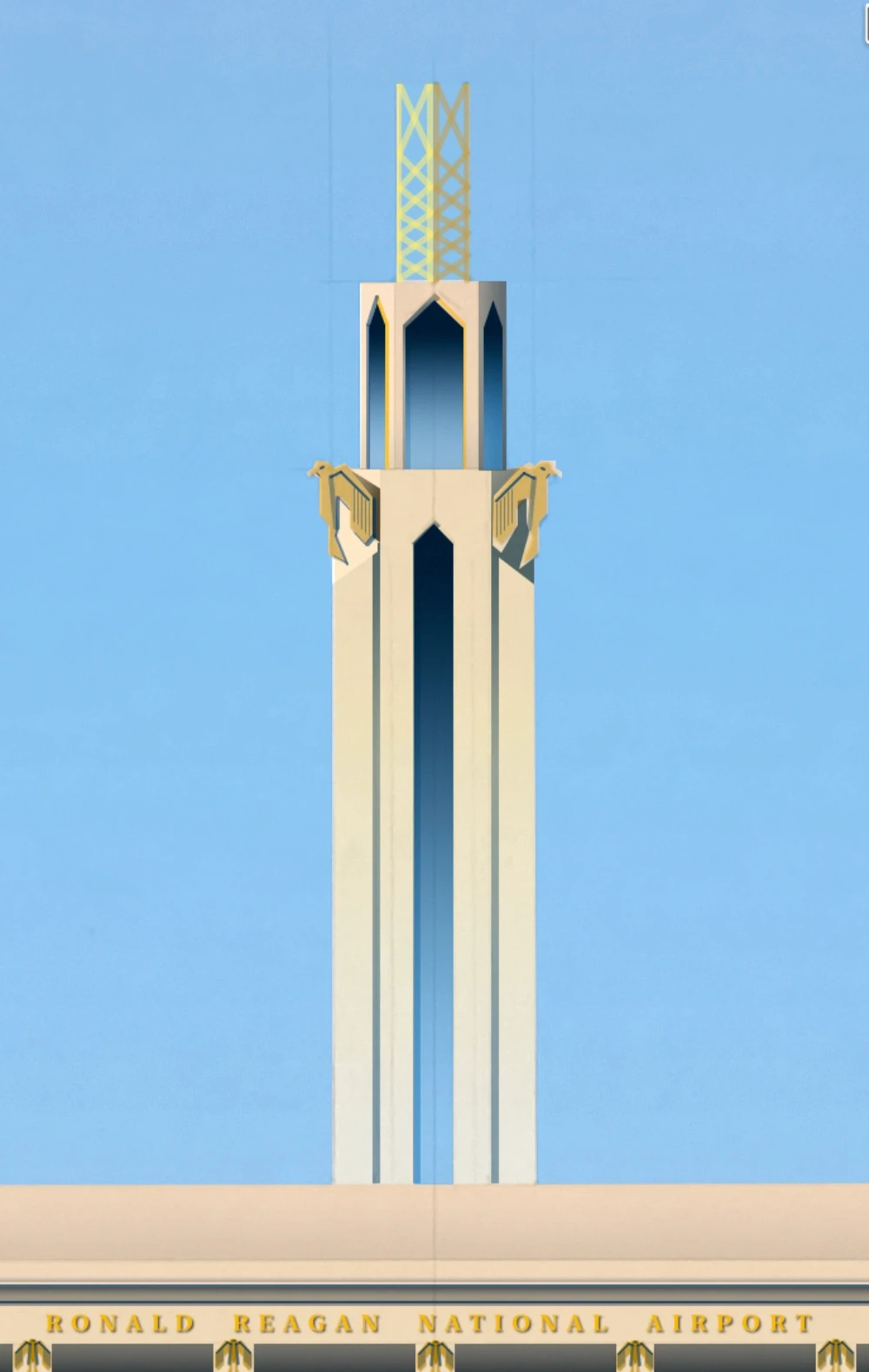
Detail of Control Tower
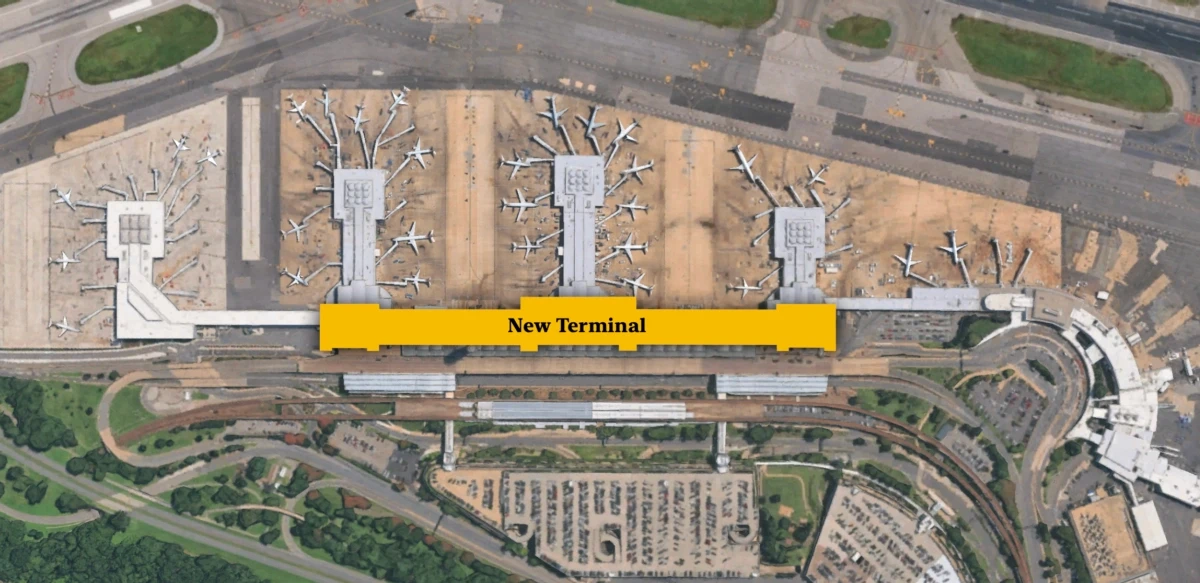
Site Plan
The primary artistic inspiration for this concept was the mixed Art Deco and Classical style used for many buildings in Washington, D.C. during the first half of the 20th century - a time period that coincides with the rise of air travel in the U.S. A simplified example of this style is the current Historic Terminal at Reagan National Airport. Variants of the style include Smithsonian buildings such as the National Gallery of Art, Federal offices such as the Robert F. Kennedy Department of Justice building and the Eccles Federal Reserve building, and the John F. Kennedy Center for the Performing Arts. This stylistic choice was made both to ground the redesigned terminal in the context and history of Washington, D.C., and to establish a location in the nation’s capital that celebrates the history and achievements of American flight - especially appropriate at this time of the United States’ 250th anniversary. This celebratory theme is especially clear in the ornamentation of the terminal building - for example, the gilded bald eagles used in column capitals and at the corners of the control tower, serving as emblems of flight, historic achievement, and our nation and its capital city in particular. Tall exterior windows, soaring colonnades, and domed skylights all serve to draw visitors’ eyes upwards to the sky, continuing the theme of flight. Rather than being a simple transfer point, or a boring but necessary part of travel, this redesigned terminal seeks to bring a measure of beauty and wonder back to the experience of travel, and to help all Americans who pass through it remember how much of the history and greatness of our nation rests upon travel. This building aims to both continue and commemorate an American theme that began with the voyage of the Mayflower and the expedition of Lewis and Clark, that is seen in the journeys of the pioneers and the Transcontinental Railroad, the flights of Charles Lindbergh and Amelia Earhart, and is most recently found in the achievements of the Apollo and Artemis expeditions. Exploration, travel, and discovery have always been integral to the American spirit, because the United States is a nation of those who hope and dream, who have the drive to sacrifice and go to extraordinary heights in search of something better or to achieve what no one thought possible. This new airport terminal for our nation’s capital honors that spirit, and I hope it inspires future generations of Americans not to abandon it and to always keep exploring.